


Subscribe to get the latest offers and Else news.
Most babies are ready to explore the world of solid foods at six months old. This transition allows your infant to get the extra nutrients they need for proper development. Plant-based options ensure your child receives gentle, whole-food nutrition.
Starting solids plant-based baby foods is an important milestone that helps parents provide clean, whole-food nutrition during development. According to the CDC, most children are ready for solid foods around six months of age. This transition is a gradual step where infants continue to receive breast milk or formula while slowly exploring new tastes. Choosing plant-based options like lentils, tofu, and whole grains ensures your baby gets essential proteins without common irritants like dairy or soy. This approach supports healthy growth while helping your little one build a foundation for wellness through diverse ingredients. Always consult your pediatrician before making major changes to your baby's diet or if you have specific concerns about their nutritional needs.
Understanding the right time to begin this journey is the first step for any parent. You likely have questions about your baby's readiness for their first bite of mashed avocado or infant cereal. Below, we cover the key physical signs to look for and everything you need to know about this exciting transition.
Shop Baby Super Cereal - Iron-Fortified First Food
Starting Solids Plant-based Baby Foods: When Is Your Baby Ready for Solid Foods?
Most babies are ready to try their first bites of solid food at about 6 months old. The Centers for Disease Control and Prevention (CDC) says this age is best for growth and health. Before you start, you should look for signs that your little one is ready to eat. Each child grows at their own pace, so watching these physical changes is key.
Physical signs of readiness
Your baby needs strong muscles to eat safely. They should be able to sit up with little or no help. Good head and neck control are also vital. These skills help your baby swallow food without choking. When you see your baby sit tall in a high chair, it might be time to begin introducing infant cereal or soft plant-based foods.
You may also notice that your baby stops pushing food out of their mouth with their tongue. This is called the tongue-thrust reflex. As it goes away, your baby can move food to the back of their throat to swallow. If they still push food out, they may need more time. You can try again in a week or two.
Behavioral interest in food
Interest in what you are eating is a big sign. Your baby might lean forward when they see food or reach out for your plate. They might also watch you closely during meals. This curiosity shows they are ready for new tastes and textures. It is a fun part of the process when starting solids plant-based baby foods.
- Sit up straight. Your baby can sit in a high chair or feeding seat without slouching or needing much support.
- Hold their head steady. They have full control over their head and neck movements, which is vital for safe swallowing.
- Open their mouth. Your baby shows they want to eat by opening up when food or a spoon comes near them.
- Keep food in. They no longer use their tongue to push food back out of their mouth immediately.
- Show clear interest. They watch you eat, reach for food, or seem eager to join in on family meal times.
Consult your pediatrician first
Always talk to your doctor before you give your baby solid foods. This is very important if your baby is under 12 months old. A pediatrician can check if your baby is growing well. They can also give advice on how to manage allergies or other health needs. They will help you find the best way to start this new stage for your child.
Best First Plant-Based Foods for Your Baby
Picking the right first foods is a big step for your baby. When you start the move to starting solids plant-based baby foods, you want to choose items that are full of nutrients and easy to eat. A great way to help your child is to offer a rainbow of different-colored foods on their plate. This variety helps give them the vitamins they need for growth, as noted by the CDC.
Soft Fruits and Healthy Fats
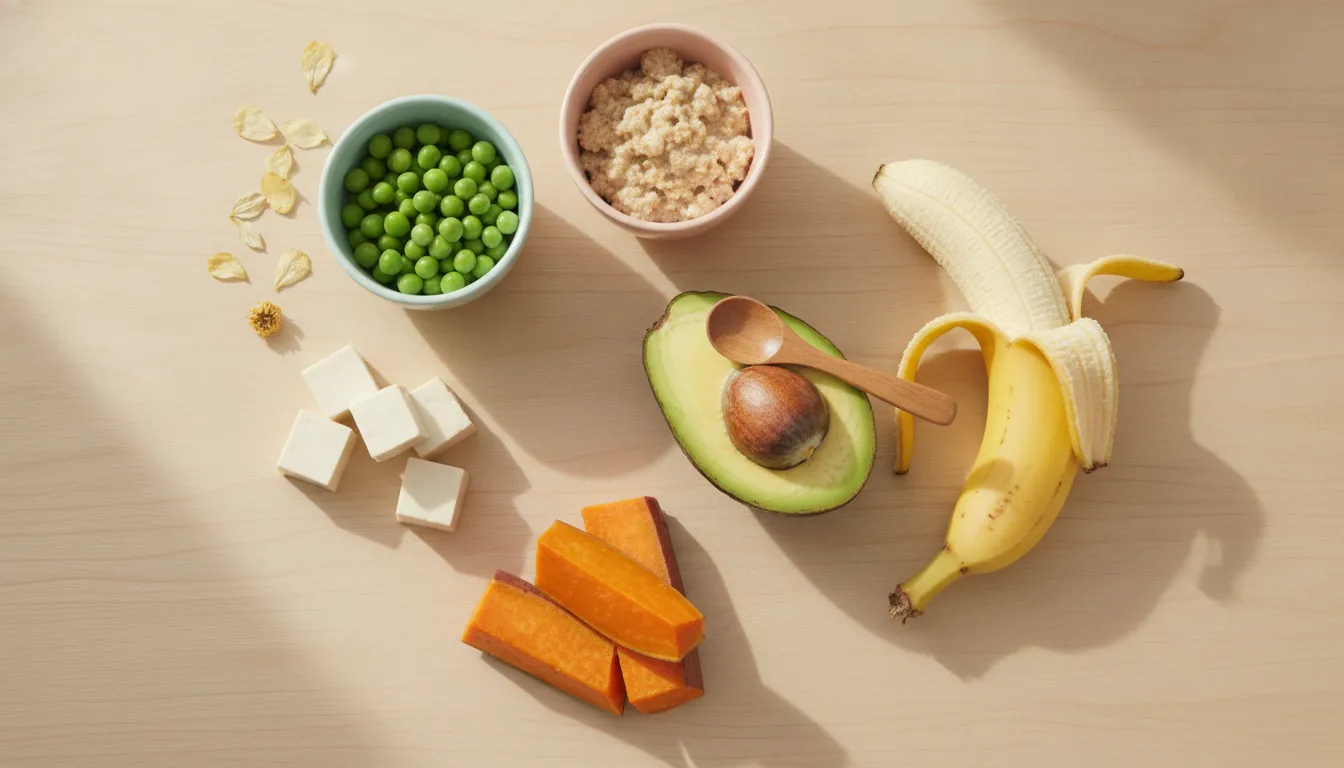
Avocados and bananas are great first choices for babies at six months. They have a creamy texture that is perfect for new eaters. You can mash them or cut them into soft, small pieces to prevent choking. Avocados give healthy fats for brain health, while bananas provide quick energy. Strawberries and pears are also good fruits to try once your baby is ready for more flavors.
Plant Proteins and Legumes
Beans, peas, and lentils are key for plant-based babies. Cooked lentils and mashed peas are soft and full of protein. You can also offer small pieces of tofu. Tofu is very gentle on the stomach and easy for small gums to chew. For a solid start, many parents begin by introducing infant cereal to help their child learn how to swallow thicker foods.
Soft Vegetables and Whole Grains
Sweet potatoes and carrots are often baby favorites because of their sweet taste. Cook these until they are very soft, then mash them or cut them into small bits. As your baby gets better at eating, you can add whole grain options like soft breads or pastas to their diet. These grains give energy and keep your baby full. Always check that every piece of food is soft enough to smash between two fingers before giving it to your baby.
Why Does Iron Matter When Starting Solids with Plant-Based Foods?
At about six months, your baby begins the move from milk to a blend of foods. This is a fun time, but it also brings new needs. One of the most vital health needs for your child now is iron. During the first few months of life, babies use iron they stored while in the womb. By the half-year mark, these stores start to drop. To keep up with fast growth, your baby needs to get iron from their first meals.
Helping your baby grow and learn
Iron does more than just help the blood. It is a key part of brain growth and learning skills. The Centers for Disease Control and Prevention notes that babies need many different foods at this stage for healthy growth. When you are introducing infant cereal, you want to pick a type that gives them enough of this mineral. If a baby does not get enough iron, they may feel tired or have a hard time reaching milestones.
For parents who choose a plant-based path, finding the right source is key. Some plants have iron, but the body does not always take it in as easily as it does from meat. You can help this by serving iron-rich foods with fruits that have vitamin C. This helps your baby use the iron better. Picking a high-grade food that is fortified with iron is one of the best ways to support your child.
Clean whole-food plants for babies
A great way to start is with a cereal made from real plants. Else Baby Super Cereal is made from over 90 percent whole-food plants like almonds, buckwheat, and tapioca. These ingredients provide a solid base for a child's diet. This mix offers a safe way to start your baby on solids without using common irritants. It is a dairy-free baby cereal option that also leaves out soy, gluten, and corn syrup.
Safety is just as vital as the food itself. Else is the first baby cereal brand to earn the Clean Label Project Purity Award. This means the cereal has been tested for heavy metals and other contaminants. When you feed your baby, you can feel good knowing the food is clean and pure. Medical experts like Dr. Kayla Bridges, DCN, RD-AP, CNSC, FAND, back these plant-based choices for kids. She helps make sure the food meets high health standards.
Gentle on your baby's tummy
Many parents worry about how new foods will affect a baby's gut. Some iron-rich foods can cause gas or hard stools. Else products are built to be gentle. In fact, clinical surveys show that over 76 percent of parents saw better gut health after using Else. This is a big win for babies who have a sensitive stomach or have had issues with other foods.
A diverse diet is key for a healthy baby. You can offer a rainbow of foods to give them many nutrients. Before you start any new food, talk to your doctor. They can help you plan a diet that fits your child's needs and health goals. You can Shop Baby Super Cereal now to find the best fit for your little one. Keeping your baby healthy starts with the right first bites.
Texture Progression: From Purees to Finger Foods
As your baby grows, the way you prepare their food will change. Moving through new textures helps your baby learn how to chew and swallow safely. It also makes them more comfortable with new foods. You should always talk to your doctor before you start or change your baby's feeding plan to ensure they are ready for these steps.
Stages of Texture
Most babies start with very smooth foods around six months. By the time they are one year old, they can often eat many of the same healthy foods as the rest of the family. You can help this by slowly adding more lumps to their meals. Using introducing infant cereal mixed with breast milk or formula is a common way to control the thickness of first meals.
Thin Purees (6 Months): Start with foods that are smooth and easy to swallow. You can blend foods like avocado or cooked peas into a fine paste. The CDC recommends that first foods should be soft and mashed to help your child eat safely. Purees should have no lumps at this stage.
Thick and Lumpy (7 to 8 Months): Once your baby is used to purees, you can stop using the blender. Try mashing a sweet potato with a fork. This stage adds small lumps that help your baby practice moving food in their mouth. Soft beans are another great plant-based choice for mashing at this age.
Soft Finger Foods (9 to 10 Months): At this age, many babies can pick up food with their fingers. You can offer soft, small pieces of tofu or very ripe fruit. Make sure the pieces are small to prevent choking. A good rule is to serve foods that you can easily squish between your thumb and finger.
Bite-Sized Pieces (12 Months): By one year, your baby can handle a wider range of textures. You can serve small pieces of cooked plants or soft pasta. Continue to avoid hard or sticky foods that could be a choking risk. At this stage, your baby is learning to eat a variety of plant-based baby cereal and whole foods.
Focus on Safety
Safety is the most important part of this process. Always sit with your baby while they eat and watch them closely. Avoid foods like whole grapes, hard nuts, or large chunks of raw carrots. Cooking plants until they are soft and cutting them into small bits will help keep mealtime safe and fun for your little one.
Baby-Led Weaning with Plant-Based Foods
Baby-led weaning (BLW) is a way to start solids that lets your child lead the way. Instead of spoon-feeding purees, you give your baby soft finger foods they can pick up. This method helps your baby learn to chew, swallow, and stop eating when they are full. Many parents find it a fun and easy path to starting solids plant-based baby foods at home.
Safe First Foods for BLW
When you start BLW, you want foods that are soft enough to mash with your tongue. Thick spears of avocado and steamed sweet potato wedges are great first picks. You can also offer soft tofu strips or ripe banana halves. These shapes are easy for tiny hands to grasp. Most babies should start eating these foods around 6 months of age for healthy growth.
Early variety is key to building good tastes. Giving your child many flavors now helps them form healthy eating habits for the future. Plant-based foods offer many colors and textures to explore. You might also try introducing infant cereal that is thick enough for them to scoop with their fingers.
Safety and Supervision
Safety is the most important part of any feeding plan. You must always watch your baby while they eat to prevent choking. It is normal to see some gagging as they learn to move food in their mouth. This is part of the learning process and shows they are working on their skills. Keeping a diverse diet helps support healthy growth during this big change.
Every baby grows at their own pace. Before you begin any new feeding style, speak with your doctor. You should consult a pediatrician about food choices or any growth concerns you may have. They can help you make a plan that is safe and right for your child.
What Key Nutrients Do Plant-Based Babies Need?
When starting solids plant-based baby foods, it is wise to plan for key vitamins and minerals that support growth. A diverse diet is essential during the complementary feeding period. Here is a simple guide to the nutrients your baby needs and where to find them.
| Nutrient | Why It Matters | Plant-Based Sources | Tip for Parents |
|---|---|---|---|
| Iron | Supports brain development, energy, and red blood cell formation. Iron stores from birth begin to deplete around 6 months. | Iron-fortified baby cereal (like Else Baby Super Cereal), cooked lentils, mashed beans, firm tofu | Pair with vitamin C foods (mashed berries, pureed bell pepper) to boost absorption. |
| Protein | Builds muscles, tissues, and enzymes for healthy growth. | Soft tofu, mashed lentils, cooked peas, whole grain pastas, fortified cereal | Offer a variety of plant proteins throughout the day to cover all amino acids. |
| Calcium | Builds strong bones and teeth; supports nerve and muscle function. | Fortified plant milks (after 12 months), calcium-set tofu, cooked leafy greens, chia seeds | For babies under 12 months, breast milk or formula remains the primary calcium source. |
| Vitamin B12 | Essential for brain development, nerve health, and forming red blood cells. | Fortified foods (cereal, plant milks), nutritional yeast (in small amounts after 12 months) | B12 is not naturally found in most plants - fortified foods or supplements are needed. |
| Vitamin D | Supports immune function and calcium absorption for bone health. | Fortified infant cereal, fortified plant milks, safe sun exposure (with pediatrician guidance) | The AAP recommends a vitamin D supplement for all breastfed infants, including those eating solids. |
| Omega-3 (ALA) | Supports brain and eye development during the first year. | Ground chia seeds, ground flaxseed, hemp seeds (finely ground), fortified foods | Grind seeds into a fine powder to prevent choking and improve absorption. |
| Zinc | Supports immune function, cell growth, and taste development. | Cooked chickpeas, firm tofu, fortified cereal, pumpkin seed powder | Soaking and cooking legumes improves zinc availability for tiny tummies. |
Between 6 and 12 months, infants should continue receiving breast milk or formula alongside solid foods. After 12 months, fortified, unsweetened plant-based milks can be introduced as part of a balanced diet. For a full comparison of plant-based nutrition options, compare Else products to see how they support your baby's nutritional needs during this important stage.
Research on plant-based complementary feeding confirms that with thoughtful planning, a well-balanced plant-based diet can support healthy infant growth. Always consult your pediatrician to tailor these recommendations to your baby's specific needs.
Frequently Asked Questions About Starting Solids with Plant-Based Foods
When should I start feeding my baby solid plant-based foods?
Most babies are ready to start solid foods around 6 months of age. Look for signs of readiness: sitting up with support, good head control, loss of the tongue-thrust reflex, and genuine interest in food. Always consult your pediatrician before beginning solids.
Is it safe to feed a 6-month-old a plant-based diet?
Yes, with careful planning. A well-balanced plant-based diet can support healthy growth for infants 6 months and older. The key is ensuring adequate iron, protein, vitamin B12, vitamin D, calcium, and zinc. Many parents choose iron-fortified plant-based baby cereal as a reliable first food to cover key nutrients.
How can I ensure my baby gets enough iron on a plant-based diet?
Iron-fortified baby cereal is one of the easiest ways to provide iron. Offer it alongside vitamin C-rich foods like mashed berries or pureed bell peppers, which boost iron absorption. Cooked lentils, mashed beans, and soft tofu also contribute iron. Else Baby Super Cereal is an iron-fortified option made from 90%+ whole-food plants.
What are the best first plant-based foods for my baby?
Excellent first plant-based foods include mashed avocado, ripe banana, steamed sweet potato, cooked peas, soft tofu, and iron-fortified baby cereal. All should be prepared as smooth purees or soft, mashable textures appropriate for your baby's stage.
Does my baby still need breast milk or formula when starting solids?
Yes. Between 6 and 12 months, breast milk or formula should remain your baby's primary source of nutrition. Solid foods complement milk feeds - not replace them. Think of the first few months of solids as exploration and practice rather than full meals.
Can I do baby-led weaning with plant-based foods?
Absolutely. Soft avocado spears, steamed sweet potato wedges, ripe banana halves, and firm tofu strips are all great BLW-friendly plant-based options. Always supervise your baby during meals and ensure foods are soft enough to mash between your fingers. Discuss BLW with your pediatrician before starting.
Disclaimer: This article is for informational purposes only and does not constitute medical advice. Always consult your pediatrician or healthcare provider before introducing solid foods, especially if your baby has allergies, digestive concerns, or other medical conditions.
Start Your Baby's Solid Food Journey with Else
Else Baby Super Cereal is the only infant cereal made from 90%+ whole-food plants, fortified with iron, and proudly certified by the Clean Label Project Purity Award. Dairy-free, soy-free, and gluten-free - it is the ideal first food for your little one.