


Subscribe to get the latest offers and Else news.
Choosing between organic and conventional baby formula is one of the most important decisions a new parent makes. With confusing labels, competing claims, and varying standards, it is easy to feel overwhelmed. Understanding how ingredients are sourced, regulated, and processed puts the power back in your hands.
Organic baby formula must contain at least 95% certified organic ingredients grown without synthetic pesticides, GMOs, or artificial growth hormones. Conventional formula follows standard farming methods. Both meet FDA nutritional requirements, but organic prioritizes ingredient purity and cleaner production standards throughout the supply chain.
What Does "Organic" Actually Mean for Baby Formula?
USDA Organic certification requires that at least 95% of agricultural ingredients in baby formula are certified organic. This means crops are grown without synthetic pesticides or GMOs, and dairy ingredients come from animals not treated with growth hormones or antibiotics.
The term "organic" on a baby formula label carries real regulatory weight. The USDA National Organic Program sets strict standards that cover every step of production, from how ingredients are grown to how they are processed and handled.
- Synthetic pesticides and herbicides: Banned in organic farming. Natural pest control and soil management methods are used instead.
- Genetically modified organisms (GMOs): Strictly prohibited throughout the organic supply chain.
- Growth hormones and antibiotics: Prohibited for any livestock providing dairy ingredients.
- Processing aids: Only approved organic-compatible substances may be used during manufacturing.
All baby formulas sold in the U.S., whether organic or conventional, must meet FDA nutritional standards for complete infant nutrition. Organic certification adds a layer of ingredient-quality assurance on top of those baseline requirements. Learn more about the benefits of organic baby formula.
Ingredient Sourcing: Organic vs Conventional
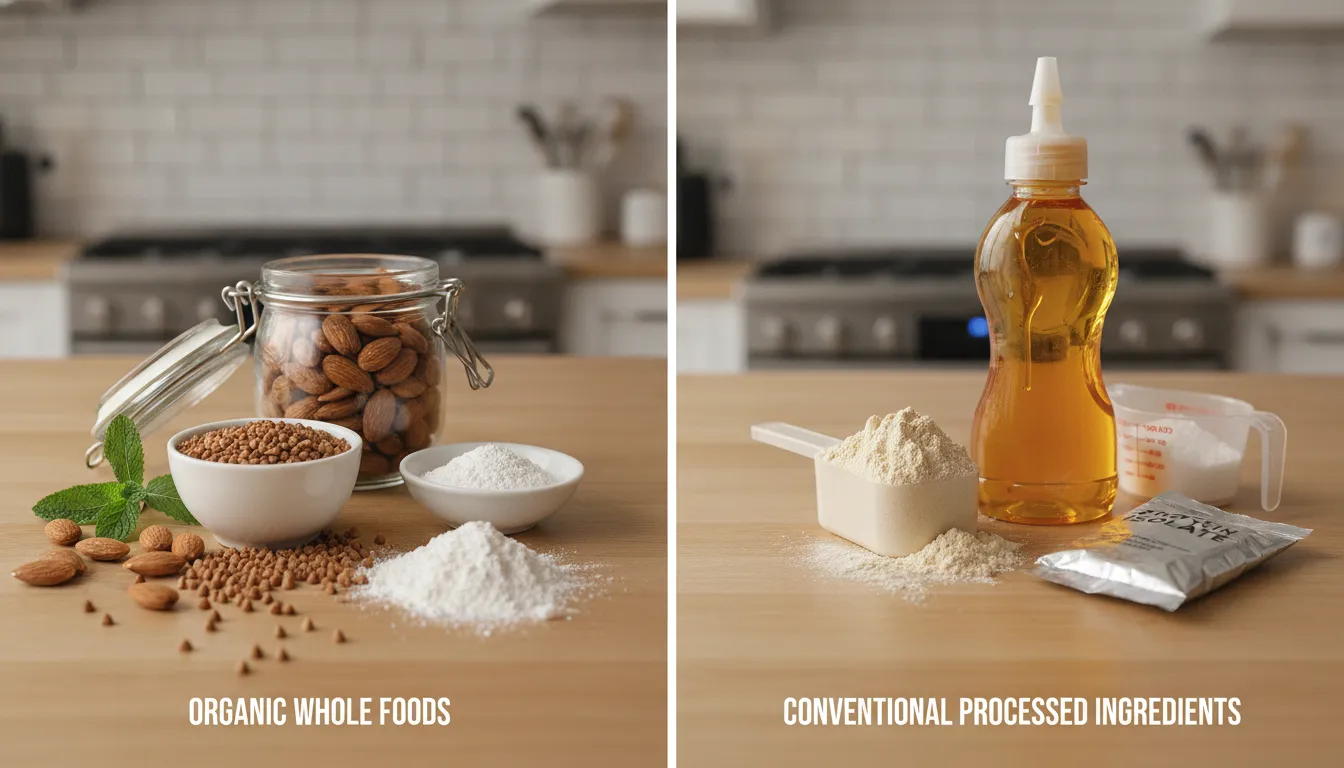
Organic formulas source ingredients from certified organic farms that prohibit synthetic chemicals and GMOs. Conventional formulas use standard agricultural ingredients that permit synthetic inputs. Organic formulas use organic lactose and whole-food bases, while conventional brands often rely on protein isolates and refined sugars.
How ingredients are grown and sourced defines the fundamental difference between organic and conventional baby formulas. These sourcing decisions directly affect the purity and composition of the final product.
Agricultural Ingredients
Organic baby formulas source their agricultural ingredients exclusively from certified organic farms. Dairy milk comes from cows raised on organic pasture without growth hormones or antibiotics. Plant ingredients like oils and carbohydrates are grown without synthetic chemical inputs. Conventional formulas use standard agricultural ingredients where synthetic pesticides, herbicides, and fertilizers are permitted.
Protein and Carbohydrate Bases
Conventional baby formulas frequently rely on highly processed protein isolates and refined sugars. Common carbohydrate sources include corn syrup solids, glucose syrup, or maltodextrin. Organic formulas avoid these heavily processed ingredients and instead use organic lactose or whole-food carbohydrate sources.
- Organic formulas: Organic lactose, whole milk proteins, minimally processed plant proteins.
- Conventional formulas: Corn syrup solids, soy protein isolates, high-heat processed dairy proteins.
Else's Whole-Food Philosophy
Else Nutrition goes beyond standard organic by building its formula around whole foods. Instead of protein isolates, Else uses whole almonds and buckwheat as primary protein and fat sources, with tapioca as a natural carbohydrate base. Roughly 80-90% of these ingredients are minimally processed, preserving their natural nutrient matrix. Compare Else to other options on our product comparison page.
Organic vs Conventional Ingredient Sourcing
| Ingredient Category | Organic Sourcing Standards | Conventional Sourcing Standards |
|---|---|---|
| Pesticides and Herbicides | Banned; natural soil management and pest control only. | Synthetic chemical pesticides and weed killers permitted. |
| Genetically Modified Organisms (GMOs) | Strictly prohibited throughout the entire supply chain. | Genetically modified crops (like conventional soy or corn) permitted. |
| Growth Hormones | Banned; dairy cows raised naturally on organic feed. | Synthetic hormones (like rBST) permitted to boost milk yield. |
| Primary Carbohydrate | Mainly organic lactose or natural starches. | Refined sugars, glucose syrup, or corn syrup solids frequently used. |
| Protein Quality | Focus on whole milk or minimally processed proteins. | Highly refined protein isolates (like soy protein isolate) common. |
Regulatory Standards: USDA Organic vs FDA Requirements
The FDA sets nutritional and safety rules that all infant formulas must meet. USDA Organic certification goes further, regulating how ingredients are grown and processed. Additional certifications like Clean Label Project test for heavy metals and industrial contaminants beyond organic requirements.
Understanding the regulatory landscape helps parents see what each label actually guarantees. The FDA and USDA regulate different parts of the formula supply chain.
FDA Requirements for Infant Formula
The FDA establishes the nutritional baseline for all infant formulas sold in the United States. These regulations specify exact amounts of proteins, fats, carbohydrates, and vitamins required for complete infant nutrition. Manufacturing facilities must follow strict safety protocols. However, FDA rules focus on nutritional adequacy and food safety, not on how agricultural ingredients are grown or processed.
USDA Organic Certification
USDA Organic certification addresses ingredient production methods that FDA rules do not cover. For a formula to carry the USDA Organic seal:
- At least 95% of agricultural ingredients must be certified organic.
- Ingredients must be grown without synthetic pesticides or GMOs.
- Dairy sources must come from animals raised without antibiotics or growth hormones.
- The entire supply chain undergoes third-party inspection annually.
Some research raises concerns about environmental contaminants like persistent organic pollutants (POPs) and endocrine-disrupting chemicals (EDCs) found in non-organic sources, which organic standards aim to reduce. You can explore published research for more detail.
Beyond Organic: Additional Certifications
Parents seeking even greater assurance can look for certifications beyond USDA Organic. The Clean Label Project Purity Award tests products for hundreds of environmental and industrial contaminants. Including heavy metals, plasticizers, and pesticide residues not fully covered by organic rules alone. Find out more on our Clean Label Project page.
How Organic and Conventional Formulas Are Processed
Organic baby formulas emphasize minimal processing to keep ingredients closer to their natural state. Conventional formulas often use intensive high-heat processing and protein isolates. Else Nutrition takes a whole-food approach where 80-90% of ingredients remain minimally processed.
Processing methods directly affect the nutritional integrity of baby formula ingredients. The less processing ingredients undergo, the more their natural nutrient profile is preserved.
- Organic processing: Gentle methods that preserve whole-food nutrients. Ingredients like whole grains and plant proteins are used in minimally refined forms.
- Conventional processing: High-heat techniques and chemical extraction to create protein isolates and refined sugars. These methods can alter the natural structure of ingredients.
Else Nutrition exemplifies the whole-food processing approach. Their formula uses almonds, buckwheat, and tapioca in forms that are 80-90% minimally processed. This wide-ranging commitment to ingredient integrity is paired with rigorous quality testing for heavy metals and over 550 toxins. Read more about whole food baby formula.
Nutritional Profiles: What Is Inside the Tub
Both organic and conventional formulas provide essential nutrients like iron, DHA, and prebiotics required for infant development. The difference lies in how those nutrients are delivered. Organic formulas use whole-food sources and avoid refined additives, while conventional options often use protein isolates and added sugars.
Regardless of organic status, every infant formula sold in the U.S. must provide complete nutrition. But the ingredient sources and quality differ significantly.
- Iron: Present in all formulas for healthy blood and brain development.
- DHA: An omega-3 fatty acid that supports eye and brain development, present in most premium formulas.
- Prebiotics: Fibers that feed beneficial gut bacteria and support immune health, found in select formulas.
- Protein sources: Organic formulas tend to use whole milk or minimally processed plant proteins; conventional formulas frequently use isolates.
- Carbohydrate sources: Organic formulas primarily use organic lactose; conventional options may add corn syrup solids.
Is Organic Baby Formula Right for Your Baby?
Organic baby formula is an excellent choice for parents who want to minimize their baby's exposure to synthetic pesticides, GMOs, and growth hormones. Conventional formula is also safe and FDA-approved. For those seeking the cleanest possible option, whole-food organic formulas with additional purity certifications offer the highest standard.
Every family's feeding journey is unique. What works for one baby may not suit another. The key is understanding what each option provides and choosing accordingly.
When Organic Makes the Most Sense
Organic formula is ideal for parents who prioritize clean ingredient sourcing. The USDA Organic seal guarantees independent, government-backed standards for pesticide-free, GMO-free, hormone-free production. Learn more in our guide to organic baby formula.
Conventional Formula Is Still a Safe Choice
Conventional infant formula is not unsafe. The FDA strictly regulates all infant formulas to ensure complete nutrition and safety. Conventional options are often more affordable and widely available, making them a practical choice for many families.
The Clean-Label Whole-Food Option
For families looking to go beyond standard dairy or soy formulas, Else Nutrition offers a USDA Organic, plant-based alternative made from whole almonds, buckwheat, and tapioca. It is naturally dairy-free, soy-free, and free from corn syrup. Always discuss your feeding choices with your pediatrician to find the best fit for your baby's needs.
Frequently Asked Questions
Is organic baby formula actually better?
Organic baby formula is produced without synthetic pesticides, GMOs, growth hormones, or chemical fertilizers. While conventional formulas are FDA-regulated and nutritionally complete, organic formula offers a cleaner ingredient profile that reduces an infant's exposure to agricultural chemicals. According to the USDA, organic certification requires strict third-party inspections of the entire supply chain.
What are the ingredients in organic baby formula?
USDA certified organic baby formula must contain at least 95% organic agricultural ingredients. The remaining five percent consists of essential vitamins and minerals required for infant development. Organic formulas typically use organic lactose as a carbohydrate source and organic vegetable oils or whole milk fats, while avoiding corn syrup solids or soy protein isolates.
Are European organic baby formulas safer?
European organic formulas follow European Commission standards, which often have stricter requirements regarding synthetic ingredients than some domestic standards. However, both U.S. and European formulas must meet strict nutritional rules. Many parents prefer European options because they prohibit added sugars like corn syrup and prioritize Biodynamic farming practices.
Can organic baby formula help with heavy metal concerns?
Organic certification focuses on agricultural sourcing but does not automatically guarantee freedom from heavy metals, which can exist in soil and water. For maximum purity, look for brands with independent certifications. Else Nutrition is certified by the Clean Label Project, ensuring rigorous screening for heavy metals, pesticides, and over 550 industrial contaminants.
Ready to Choose Clean, Whole-Food Nutrition?
Selecting the right nutrition for your infant is a powerful step in supporting their growth and long-term health. While both organic and conventional baby formulas satisfy FDA safety rules, choosing a clean-label, whole-food alternative ensures your child receives gentle, unprocessed nourishment from the very start.
Else Nutrition provides a revolutionary USDA Organic plant-based formula made from whole almonds, buckwheat, and tapioca. Free from dairy, soy, corn syrup, and highly processed isolates. Else is designed to be gentle on sensitive stomachs while providing clean, complete pediatric nutrition certified pure by the Clean Label Project.