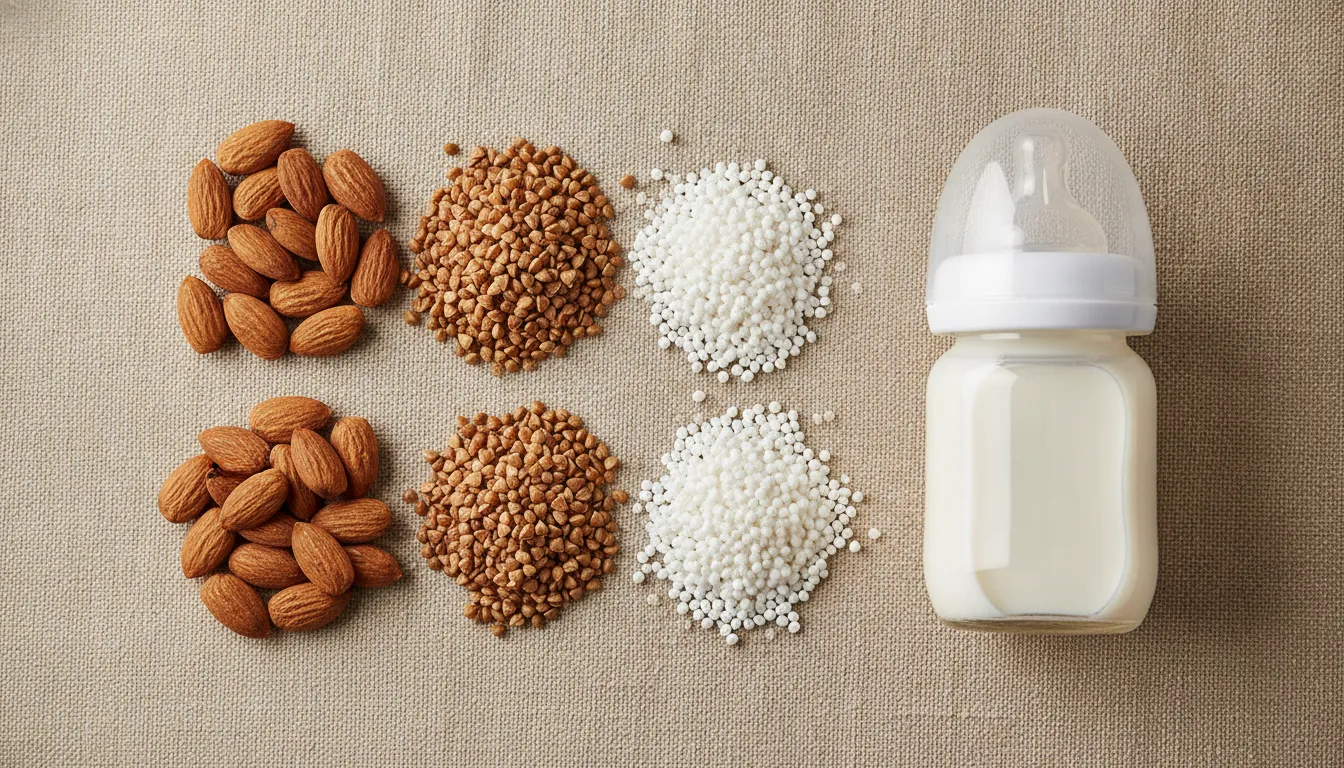
Many baby formulas use thickeners such as locust bean gum to help create a consistent texture and keep ingredients evenly mixed. If your baby seems uncomfortable after feeds, the full feeding pattern matters more than any single ingredient.
Gums in baby formula are ingredients used as stabilizers or thickeners. Names parents may see include locust bean gum, xanthan gum, guar gum, and gellan gum. Their jobs can include helping ingredients stay evenly mixed and creating a consistent texture. Seeing a gum on a label does not, by itself, show whether it will agree with an individual baby. If you notice a repeated change in feeding comfort, stool patterns, or intake, document it and discuss the full ingredient list and feeding routine with your pediatrician.
To help you find the best option for your child, we should look closer at the specifics. You need to know what to look for when reading the label on a standard bottle. Understanding gums in baby formula starts with
What are gums in baby formula?
Gums in baby formula are plant-based or lab-made extras. They help keep the milk mixed and smooth. Most people know them as thickeners or stabilizers. Without these parts, the fats and water in some formulas would split in the bottle. While they serve a clear goal for the product, they can sometimes affect how a baby feels after a meal.
If you are looking for a clean choice, check out our whole-food meals. You can compare Else products to see how we avoid these extras. We use simple parts like almonds and buckwheat to provide a natural texture.
How gums act as stabilizers
Formula makers add gums to give the milk an even texture. These items act like a net that holds the liquid together. This means the milk looks and feels the same from the first sip to the last. Some gums also help the formula flow better through a bottle nipple. This helps babies who may have trouble with very thin liquids.
These extras help the formula stay fresh for a long time on a store shelf. They also stop the powder from clumping when you mix it with water at home. While these traits make the formula easy to use, they do not add health gains to your child. They are there for the product, not for the baby's growth.
Common gums used in infant feeding
You may see names like xanthan, carrageenan, or gellan on a label. Locust bean gum is also very common in infant foods. Each gum has a slightly different job. For example, some are better at making the liquid thick. Others are better at keeping the mix from settling in the can. Research on locust bean gum shows it is very strong against digestive enzymes.
Some parents find that their children do better with a formula easy on baby's stomach that skips these gums. Using fewer extras can lead to less gas for some babies. It is helpful to know the common baby formula ingredients to avoid when your child has an upset gut. This allows you to make a choice that fits your baby's unique needs.
Function versus baby tolerance
It is vital to know that a gum's job does not tell you how a baby will react to it. Some infants digest these gums with no issues at all. Other babies may have gas, bloating, or loose stools after drinking them. Every child is different, and their gut health plays a big role in how they feel.
A gum that helps one baby with reflux might cause gas for another baby. This is why many parents look for whole-food options. If you want to try a new choice, you should talk to your doctor first. They can help you find a safe way to move to a gum-free option. Watching how your baby reacts to each feed is the best way to know what works for them.
Common gum names on formula labels
When you pick up a can of baby formula, the list of names can be long. You might see words like "xanthan" or "guar." These are types of gums in baby formula. Brands use them to keep the liquid from splitting or settling. While they help the product stay mixed, they are not always the best for your child. Knowing what these names mean can help you pick the best path for your baby's health.
Locust bean and carob bean gum
Locust bean gum comes from the seeds of the carob tree. It is a very common thickener in infant food. Brands love it because it stays thick even when it hits the stomach. But this can lead to issues. Research from the FDA infant formula safety guidance shows that this gum can lower how well a baby takes in calcium. It may also block some iron from getting into the blood. This happens because the gum creates a thick mesh that traps these vital nutrients.
Xanthan, guar, and gellan gum
These three gums are often found in both dairy and plant-based options. They are very strong mixers. Even a tiny amount can keep a bottle from splitting for many hours. But many parents find these are common baby formula ingredients to avoid if their child has a sensitive gut. Since these gums are hard to digest, they can cause gas or loose stools. This is why some babies feel better when they switch to a gum-free option.
Cellulose gum and label tips
Cellulose gum often comes from plants like wood or cotton. It is a cheap way to make formula look creamy. However, it does not provide the same value as real food. Many parents now look for a formula easy on baby's stomach that skips these items. By using real parts like almonds and buckwheat, you can get a smooth feel without the risk of tummy pain. Always look for words that end in "gum" to find these hidden mixers.
Criteria
Formula with added gums
Else whole-food approach
Ingredient examples
May include locust bean, xanthan, guar, gellan, or cellulose gum
Uses almonds, buckwheat, and tapioca as primary ingredients
Texture method
Added gums help stabilize or thicken the prepared product
The whole-food base contributes to the product's texture
What parents should assess
Read the full label and track individual tolerance
Read the full label and confirm age suitability
Medical guidance
Discuss feeding concerns with a pediatrician
Discuss feeding concerns and product suitability with a pediatrician
Most brands use gums to save money and time. It is easier to use a small amount of a strong gum than to use real food. Gums make sure every bottle looks and feels the same. But your baby needs more than a smooth look. They need food that is easy to use and digest. Choosing whole-food bases over gums is a simple way to support your child's growth and comfort.
Why are gums added to baby formula?
Parents often feel surprised when they see xanthan or locust bean gum on a label. These parts are not there for food or vitamins. Instead, they act as tools for the maker. They help with the feel, mix, and life of the drink on the shelf. Most of the time, they are used to keep the drink smooth and easy for your baby to swallow.
Keeping the mix steady and smooth
Baby formula is a complex blend of oils, proteins, and water. These items do not like to stay mixed on their own. Over time, the fat might float to the top while the water stays at the bottom. Gums act as mixers to stop this from happening. They create a net in the liquid that keeps every part in its place.
This process is vital for steady food levels. If the formula splits, your baby might get too much fat in one gulp and too little in the next. Gums ensure that each bottle has the right balance of food from start to finish. Some gums, like locust bean gum, are very good at this task. They are strong and help the liquid stay the same even when it sits in a store for months.
Improving the feel and flow
The way a formula feels in the mouth is its texture. Gums make the liquid feel creamy and rich. This can help babies take the bottle more easily. It also helps the liquid move through the nipple at a steady pace. If a formula is too thin, a baby might gulp too fast and swallow air. If it is too thick, they may get tired of sucking before they are full.
But many parents worry about what these extras do to a baby's gut. Some gums can make it harder for a baby to take in minerals. For example, American Academy of Pediatrics feeding guidance that some thickeners can lower how well a baby uses calcium and iron. This is why many families search for a formula easy on baby's stomach when their child has a sensitive gut.
Helping with reflux and medical needs
There are times when a thick formula is a health choice. Some infants have a hard time keeping food down. This is often called reflux. For these babies, a doctor might suggest a product with added gums. The thicker liquid is heavier. This weight helps it stay in the stomach instead of coming back up.
In these cases, gums are very helpful. They allow a baby to get the food they need to grow without the pain of reflux. But not every baby needs this. Some brands choose to use whole foods for texture instead of gums. For example, Else Nutrition uses almonds and buckwheat to provide a natural feel. This avoids the use of processed gums that might bother a sensitive child.
Always look at the whole label. Gums are just one part of the story. If your baby has gas or hard stools, you may want to try a choice without gums. But if your baby is doing well, the gums are likely doing their job. They keep the formula safe and well mixed for every feeding.
Can gums affect a sensitive baby's digestion?
If your baby has a sensitive stomach, you may check every part of their food. Many brands add gums in baby formula to help the liquid stay smooth. These parts act as thickeners or help the mix stay together. While they have a use, some parents worry about how they affect a small gut.
Watching for signs of upset
You know your baby best. Some parents find that some thickeners can lead to more gas or spit-up. For example, locust bean gum is a common item that makes food thicker. Tests show it can resist the body's way of breaking down food. This may change how a baby feels after a feed.
There are also signs that these gums might change how the body takes in minerals. Some gums can lower the amount of iron or calcium that a baby gets from their food. Every child is different. If you see your baby is extra fussy or has loose stools, it helps to track what they eat. Finding a formula easy on baby's stomach often starts with these simple notes.
Sometimes, what looks like a problem with gums is just a prep issue. When you mix formula, you want to avoid adding too much air. Extra bubbles can cause gas and pain. Always follow the steps on the label to get the right mix of water and powder. Using the wrong amount of water can also make it hard for a baby to digest their meal.
If you shake the bottle too hard, you might see a lot of foam. Try to stir the mix in a gentle way instead. This small step can help your baby stay happy during and after their meal. If you have questions about a new mix or the right heat for the water, speak with your doctor first.
When to call your doctor
It is normal to try new foods to see what works. But some signs need quick care from a pro. If your baby has blood in their stool or does not gain weight, call your doctor right away. They can find out if the issue is a simple upset or something that needs more help. A medical expert is the best person to help you choose the right food for your child.
A doctor can also guide you on common baby formula ingredients to avoid if your child has an allergy. While avoiding some gums may help some kids, an expert will make sure your baby gets what they need to grow. Else Nutrition uses whole foods like almonds and buckwheat to avoid the need for added gums or oils. This whole-food plan helps the product stay clean and simple for sensitive tummies.
Reading the complete ingredient list can help parents identify gums and prepare specific questions for a pediatrician.
How to read a formula label for gums
Finding gums in baby formula can feel like a hard task for parents. Many brands use these parts to thicken their products and keep them smooth. You can find these facts on the back of the can. Reading the label helps you know what your child eats every day. It also helps you spot things that might cause tummy issues or gas.
Look for common gum names
Most brands put their list of parts in small print. You should look for names like xanthan gum, gellan gum, or locust bean gum. Some companies use these to keep the liquid from splitting apart. While they help with the look of the milk, they can be hard on a young child's gut. In fact, locust bean gum is a very common choice because it stays thick during the gut's work.
Some research shows that these gums may change how the body takes in good things. For example, they might lower how much iron or calcium a baby can use. If you see these on a label, you may want to look for a cleaner choice. Finding a formula easy on baby's stomach often means picking one with fewer fillers. You want a product that supports growth without adding stress to the body.
Check for clean label marks
You should also look for seals of quality on the package. Brands that care about being pure often have a Clean Label Project mark. This shows the product has been tested for bad things and extra parts that do not need to be there. It is a good sign that the company uses real food instead of gums. Whole foods like almonds and buckwheat can provide texture without the need for thickeners.
Else Nutrition uses a whole-food plan to make their products. They use almonds, buckwheat, and tapioca to give the milk a smooth feel. This means they do not have to rely on gums or other fake parts. This approach makes the food much easier to digest for children with touchy stomachs. By using real food, the brand keeps the label short and easy to read for every parent.
Check the age and stage. Make sure the product fits your child's age. If your baby is under 12 months, always talk to a doctor before you make any changes to their food.
Find the gums. Scan the full list for words like "gum" or "thickener." These are often near the middle or end of the list.
Follow the mix rules. Always mix the powder exactly as the label says. Adding too much or too little water can change how the gums work in your baby's tummy.
Track feeding notes. Note how your child acts after they eat. Look for signs of gas or fussing that might come from thickeners.
Talk with your doctor. Share what you found on the label with your doctor. They can help you decide if a gum-free option is right for your child.
Keep track of tummy changes
Changing your child's food is a big step for any family. You should watch for changes in their sleep or how they feel. If you see signs of spitting up or loose stools, it might be a reaction to a gum. Keeping a simple log can help you see patterns over time. This makes it easier to talk to your doctor about your child's needs and health.
Parents often search for ways to avoid gums in baby formula to help with touchy tummies. While these gums are safe for many, they can be a trigger for some kids. If you are worried, reach out to your healthcare provider. They can guide you through the best steps for your baby's health and growth. Using clean parts is a great way to start your child on a path to good health.
Else uses almonds, buckwheat, and tapioca as the foundation of its whole-food approach.
How Else's whole-food approach is different
Most formulas use gums like locust bean, xanthan, or gellan to create a smooth feel. These items act as thickeners to keep the drink from separating. While they help with texture, some parents look for common baby formula ingredients to avoid due to tummy issues. Else Nutrition takes a new path by using a whole-food plan instead of industrial fillers.
Whole plant ingredients for texture
Else uses a special blend of almonds, buckwheat, and tapioca as its main parts. These whole plants give the texture and bulk needed without the use of gums. By using plants that are not highly processed, the final drink is made to be easy on the stomach. This way helps parents who are choosing formula for sensitive tummies and want to skip extra additives.
The role of gums versus whole food
Studies show that some thickeners may do more than just change texture. For example, some gums may lower how well the body can take in minerals like calcium and iron. One study found that locust bean gum can reduce mineral solubility by up to 18 percent. Else avoids these risks by using whole food sources. This choice has earned Else the Clean Label Project Purity Award for its clean ingredients.
Suitability and safety for infants
It is key to know that Else products and their use vary by age. While Else has plant-based options for toddlers and kids, parents must follow safety steps for young babies. Caregivers of infants under 12 months must talk to a doctor before they change what their child eats. A doctor can help you decide if a product is the right fit for your baby's health needs.
When should you talk with your pediatrician?
If you see signs that your baby is not doing well with their current food, start by talking with your doctor. You know your baby best. While you may worry about gums in baby formula, it is best to check with an expert before you switch. A doctor can help you find if one ingredient is the cause or if something else is going on.
Your doctor can help you check your baby's growth and comfort. They may suggest a formula easy on baby's stomach based on your baby's needs. Do not make big changes to what your baby eats without their help. This keeps your baby safe and ensures they get the right food for their age.
Signs to share with your doctor
Watch for signs of pain during or after feeding. Some babies have a hard time with thickeners like locust bean gum, which can lead to gas or fussing. If your baby has skin rashes, a lot of spit-up, or changes in their poop, write these down. These small notes help your doctor see a clear pattern of how your baby feels.
Some babies have sensitive tummies that react to common additives. When you talk to your doctor, ask about common baby formula ingredients to avoid if you see a reaction. Sharing clear details about when symptoms happen will help your doctor make the best plan for your child.
Questions to bring to your visit
Being ready for your visit can help you get the answers you need. You might ask if your baby's symptoms could be linked to common fillers or gums. It is also helpful to ask how to safely change to a new food option if one is needed. Your doctor can show you how to switch slowly to avoid more tummy upset.
Ask your doctor about whole-food options that do not use gums or corn syrup. They can check your baby's health and tell you if a plant-based choice is right. This step is key to ensure your baby keeps growing while staying comfortable.
Urgent red flags
While some gas is normal, some signs need quick medical care. If your baby has blood in their poop or is not gaining weight, call your doctor right away. Other red flags include very hard vomiting or a baby who seems very weak or hard to wake. These signs may mean your baby needs a new type of care or a new feeding plan at once.
Frequently Asked Questions
Are gums in baby formula safe for infants?
Most gums used in baby formula are safe for healthy babies. They have approval from groups like the FDA. These items help keep the liquid mixed so it is easy for a child to drink. But some kids with sensitive stomachs might find them hard to digest. If your baby has gas or pain, it is best to talk with your doctor. They can help you find a food plan that is safe for your child's needs.
Are there baby formula brands without gums?
Yes, some brands now offer choices made without any added gums or thickeners. Else Nutrition takes a whole-food path to avoid these items. Instead of using gums like xanthan or gellan, Else uses a blend of almonds, buckwheat, and tapioca to give texture and value. This method results in a clean label and a product that is easy on the gut. You can find more details on Else products by looking at how they compare to other options.
Do gums in baby formula contribute to baby bottle tooth decay?
Most gums used in baby formula do not cause tooth decay on their own. Decay is usually caused by sugar or starch that stays on a baby's teeth for a long time. But some gums may trap other food bits near the teeth if you do not clean the mouth well. To keep your baby's smile healthy, try to wipe their gums or brush their teeth after each feed. This step helps remove any film or residue left by their meal.
Do gums in baby formula affect mineral absorption?
Some thickeners may change how a baby's body takes in key minerals. According to EFSA safety review of locust bean gum, these items can reduce how much calcium and iron the body can use. The gum can trap the minerals in the gut. This makes it harder for them to reach the blood. If your child has low iron or needs a special diet, talk to your doctor. They can help you choose a formula that supports your baby's growth.
Ready to choose a cleaner and gentler baby formula for your kids?
Waiting to switch means your baby may face tummy pain and gas from harsh gums and items that are very hard for them to digest. If you start a cleaner path today, your child can begin to feel better and sleep more while getting the whole food they need. You can compare Else products to see how our whole food way is different and much better for your family, so start your path today.
Ready to shop now? Shop our plant-based products today. You can request your clean whole food to support your child's health with foods you can trust starting this very week for all your family.
Dr. Fabiana Bar-Yoseph brings extensive expertise in pediatric nutrition and clinical research to Else
Nutrition, guiding the development of clean-label, plant-based alternatives for infants and toddlers.