


Subscribe to get the latest offers and Else news.
Breakfast shakes for kids can provide balanced nutrition when they include protein, healthy fats, and fiber from whole-food ingredients. The best options use almonds and buckwheat rather than processed isolates or fillers. Many leading brands pack in added sugar, but parents can avoid this by checking labels for short ingredient lists and whole-food sources. Dr. Kayla Bridges, DCN, RD-AP, CNSC, FAND, emphasizes that children need nutrient-dense meals for healthy development. Always consult your pediatrician before making significant dietary changes or using shakes as a primary nutrition source.
Mornings move fast. You want something quick for your child, but the drink aisle is full of claims that are hard to trust. Learning what actually makes a nutritious shake helps you choose with confidence.
Breakfast Shakes For Kids: What Makes a Breakfast Shake Nutritious for Kids?
A truly nutritious breakfast shake for kids delivers protein from whole foods, natural fats for brain development, fiber for digestion, and minimal added sugar. The ingredients list tells the real story: look for almonds, buckwheat, and tapioca rather than isolates, syrups, or gums. According to the National Institutes of Health, breakfast quality directly impacts a child's daily nutrient intake.
A good morning shake provides steady energy, not a sugar spike followed by a crash. Breakfast shakes for kids should support growth without relying on cheap fillers. Else products use whole-food ingredients with 50% less sugar than leading medical nutrition brands. Dr. Kayla Bridges recommends checking three things on every label: protein source, added sugar grams, and fiber content.
Protein supports muscle development and keeps kids full through the morning. Toddlers need about 4 to 7 grams of protein at breakfast, while school-age children need 7 to 10 grams. Healthy fats from almonds and seeds support brain development and help the body absorb vitamins A, D, and E. Fiber, ideally 3 to 5 grams per serving, supports digestion and steady energy.
How Much Added Sugar Do Kids Breakfast Shakes Hide?
Many breakfast shakes for kids contain 12 to 20 grams of added sugar per serving, often from concentrated fruit juice, cane syrup, or brown rice syrup. The American Academy of Pediatrics recommends children consume less than 25 grams of added sugar per day. One serving of a sugary shake can meet or exceed that limit before breakfast is over.
Added sugar hides behind names like cane syrup, agave nectar, brown rice syrup, and fruit juice concentrate. Even products labeled "natural" can contain high levels of these sweeteners. A high-sugar breakfast causes a rapid energy spike followed by a mid-morning crash, making it harder for kids to focus at school.
The CDC notes that high added sugar intake in children is linked to weight gain, dental cavities, and poor dietary patterns that persist into adulthood. Reading the nutrition facts panel is the only reliable way to know what is inside the bottle. Look for shakes with under 8 grams of added sugar per serving.
- Corn syrup and cane sugar are the most common sweeteners in cheap shakes
- Fruit juice concentrates sound healthy but are concentrated sugar with minimal fiber
- Brown rice syrup and agave are still added sugar despite their natural-sounding names
- Whole-food sweeteners like dates are better, but portion still matters
Why Protein and Healthy Fats Matter in a Breakfast Shake
Protein and healthy fats work together to provide sustained energy, support brain development, and keep blood sugar stable. Whole-food sources like almonds, buckwheat, and chia seeds provide these nutrients naturally, unlike processed isolates that can upset sensitive stomachs.
Not all protein is created equal. Many mass-market shakes use protein isolates, which are stripped from their original food source and can be hard on digestion. Research shows that whole-food protein sources provide better nutrient absorption and gentler digestion for children. Almonds and buckwheat deliver protein alongside fiber, vitamins, and minerals that isolates lack.
Healthy fats are essential for brain growth during early childhood. The brain is about 60% fat, and developing children need a steady supply of omega-3s and other fatty acids. Look for shakes that use almond butter, chia seeds, or avocado as fat sources rather than highly processed vegetable oils.
Protein shakes designed for children should emphasize whole-food nutrition over processed ingredients. When protein and healthy fats are balanced together, they slow digestion and keep blood sugar stable. This means your child feels full longer and has steady energy through the morning.
Micronutrients That Kids Breakfast Shakes Should Provide
Beyond macronutrients, a quality breakfast shake for kids should deliver calcium, vitamin D, iron, and zinc. These micronutrients support bone development, immune function, and cognitive growth during the early childhood years.
Calcium and vitamin D work together to build strong bones and teeth. Children ages 1 to 3 need about 700 mg of calcium and 600 IU of vitamin D each day. Many shakes fall short here, so checking the label is important. Iron supports oxygen transport in the blood and cognitive development. Zinc plays a role in immune function and cell growth. A shake that provides 15 to 25 percent of the daily value for these nutrients can meaningfully contribute to a child's daily intake. Whole-food ingredients like almonds naturally contain these minerals, which is another reason to choose shakes made from real ingredients rather than synthetic blends.
A Parent's Checklist for Choosing a Nutritious Breakfast Shake
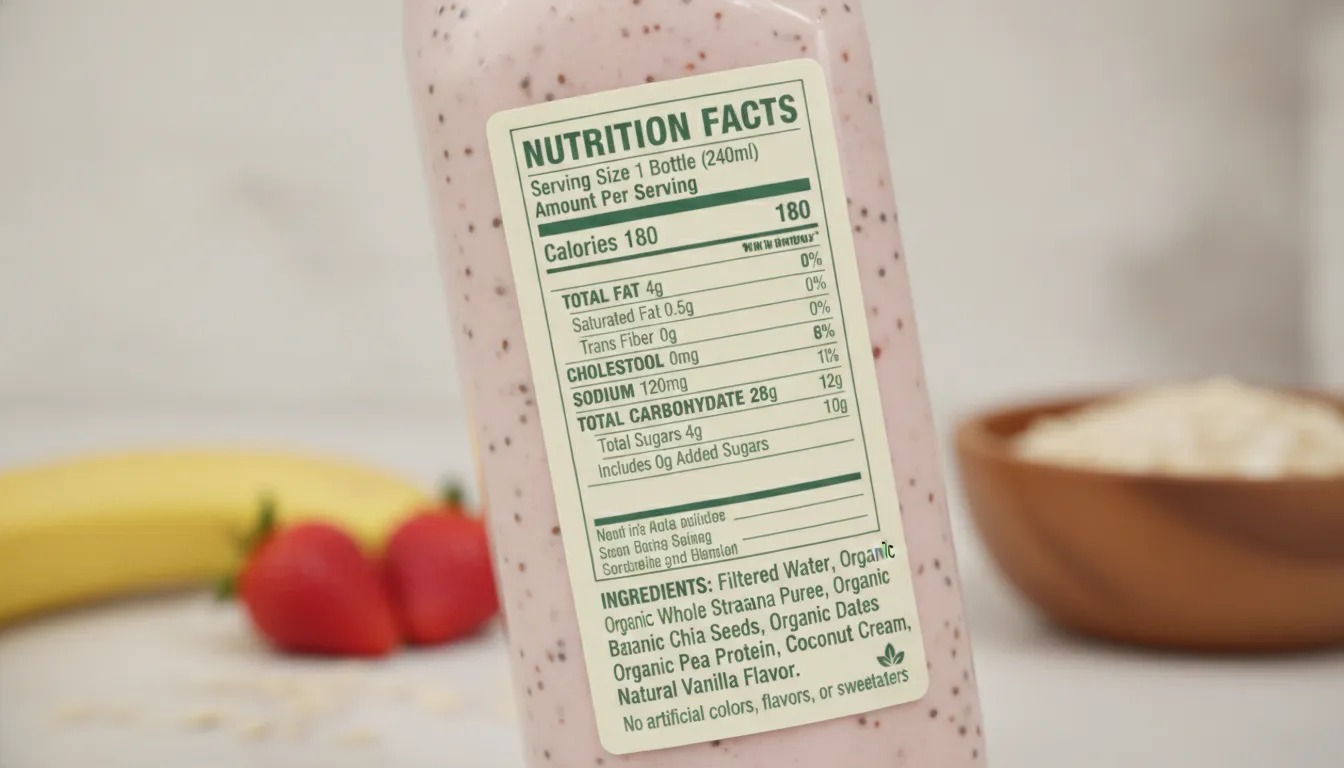
The quickest way to evaluate any breakfast shake for kids is to check three things: the ingredient list (shorter is better and should start with whole foods). The added sugar line (aim for under 8 grams), and the protein source (whole foods like almonds, not isolates).
Front-of-box marketing can be misleading. The ingredient list and nutrition facts panel reveal the truth about what is inside. Use this checklist to make confident choices for your family.
| What to Check | Look For | Avoid |
|---|---|---|
| Added Sugar | Less than 8 grams per serving | Cane syrup, corn syrup, fruit juice concentrate |
| Protein Source | Whole foods like almonds, buckwheat | Isolates, whey concentrate, soy protein |
| Fiber | 3 grams or more per serving | Zero or 1 gram |
| Fat Source | Nut butters, seeds, avocado | Highly refined vegetable oils |
| Ingredient List | Short, recognizable items | Gums, artificial flavors, carrageenan |
| Allergens | Clearly labeled | Hidden dairy or soy |
Ingredients are listed by weight from most to least. If added sugar, protein isolate, or a gum appears in the first five ingredients, the shake is heavily processed. A whole-food kids shake leads with real ingredients like almonds, buckwheat, and tapioca.
When Is a Breakfast Shake Enough and When Should You Add More?
A well-formulated breakfast shake can work as a standalone breakfast for younger children or light mornings. For older or more active kids, pairing a shake with solid food helps meet higher calorie needs and provides chewing variety. Watch for hunger cues before lunch as the best signal.
A shake is more likely to work as a full breakfast when it contains at least 8 to 10 grams of protein. A source of healthy fat, and 3 or more grams of fiber. Toddlers may find a nutrient-dense shake filling enough on its own. An older child heading to school or sports will likely benefit from adding a piece of toast with nut butter, a hard-boiled egg, or fresh fruit.
- Check the shake. Does it have protein, fat, and fiber from whole foods?
- Consider your child. Age, activity level, and appetite all matter.
- Pair when needed. Add toast, fruit, or eggs for extra staying power.
- Offer variety. Chewing different textures helps kids recognize fullness.
- Watch hunger cues. Crankiness before 10 a.m. means more solid food is needed.
Nutritional shakes for toddlers and kids work best as part of a varied diet that includes breast milk, cow milk, or solid foods. They should not serve as the sole source of nutrition unless a pediatrician recommends it. Always consult your healthcare provider about your child's specific dietary needs, especially if allergies or digestive issues are a concern.
Quick Breakfast Pairings for Busy Mornings
When a shake alone is not enough, these five pairings add texture, variety, and extra nutrients in under two minutes of prep time.
- Banana and almond butter. Slice a banana, spread almond butter on whole-grain toast. Adds potassium, healthy fats, and fiber.
- Hard-boiled egg. Prep a batch on Sunday. Adds 6 grams of protein and vitamin D in zero prep time.
- Oatmeal cup. Quick oats with cinnamon and berries. Microwaves in 90 seconds and adds fiber and complex carbs.
- Apple slices with sunflower seed butter. A crunchy contrast to a smooth shake with extra fiber and vitamin C.
- Greek yogurt pouch. If your child tolerates dairy, a single-serve pouch adds protein and probiotics.
Frequently Asked Questions
What are the best healthy breakfast shakes for kids?
The best breakfast shakes for kids use whole foods like almonds and buckwheat as their base. They contain less than 8 grams of added sugar, at least 5 grams of protein, and 3 or more grams of fiber. Look for short ingredient lists without gums, isolates, or artificial flavors. The National Institutes of Health emphasizes that quality breakfast choices support daily nutrient intake. Always talk to your pediatrician before introducing a new daily shake.
Are breakfast shakes safe for toddlers?
Breakfast shakes can be safe for toddlers when used as part of a balanced diet that includes breast milk, cow milk, or solid foods. They should not replace whole meals unless a pediatrician advises otherwise. Dr. Kayla Bridges notes that shakes designed for toddlers can help fill nutritional gaps when chosen carefully. Check that the product is specifically formulated for your child's age group and consult your pediatrician with any concerns.
What nutrients should a healthy kids breakfast shake contain?
A healthy breakfast shake for kids should provide protein (5 to 10 grams). Healthy fats from whole-food sources, fiber (3 or more grams), calcium, vitamin D, iron, and zinc. It should contain minimal added sugar and no artificial ingredients. Whole-food ingredients like almonds, buckwheat, and tapioca deliver these nutrients naturally.
Do breakfast shakes for kids help with picky eating?
Shakes can be a helpful tool for parents of picky eaters who struggle to get enough nutrients from solid foods. They provide concentrated nutrition in an easy-to-consume form. However, shakes should complement efforts to expand solid food variety, not replace them. A pediatrician or feeding specialist can provide guidance for persistent picky eating.
How do I choose between a powder shake and a ready-to-drink option?
Powder shakes offer flexibility in portion size and allow you to mix with your child's preferred milk or water. Ready-to-drink options offer convenience with no preparation. Both can be nutritious if they use whole-food ingredients and minimal added sugar. The best choice depends on your family's morning routine and your child's preferences.
Shop Nutritious Breakfast Shakes for Your Family
Choosing a breakfast shake for kids does not have to be complicated. Look for whole-food ingredients, check the added sugar, and verify that protein and fiber levels support your child's needs. Else Kids shakes deliver complete nutrition from almonds, buckwheat, and tapioca with 50% less sugar than leading medical nutrition brands. They are Clean Label Project certified and formulated with input from pediatric nutrition experts.