


Subscribe to get the latest offers and Else news.
When your newborn needs formula, the label can feel like one more decision to make during an already exhausting day. Parents may compare ingredient lists, certifications, feeding advice, and strong opinions online, only to find that every option sounds like the right one.
Shop Else plant-based baby formula and see if a clean-label, whole-food approach fits your feeding plan.
The best baby formula for newborns meets required nutritional and safety standards, fits your baby's needs, and clearly states its ingredients, preparation, and intended use. A pediatrician can help you choose, especially if your baby has feeding difficulties, allergy concerns, or other medical needs.
Ingredient transparency matters because it helps you understand what you are offering, not because one label can guarantee the same experience for every baby. Start with the nutritional foundation newborns require, then consider how formulation, preparation, and your family's priorities fit together.
What Should the Best Baby Formula for Newborns Provide?
Newborns need formula that supplies complete nutrition when formula is part of the feeding plan: energy, protein, fats, carbohydrates, vitamins, and minerals for early growth, plus iron. Safe preparation according to the product directions matters as much as the nutrition panel, and a pediatrician can help match a specific formula to your baby's needs.
Those first weeks can make every label feel urgent. New parents may wonder whether they are choosing enough nutrition, the right ingredients, or the safest option. It helps to start with the essentials a newborn actually needs.
Why does complete nutrition matter so much?
Newborns have small stomachs and rapidly changing nutritional needs. Each feeding contributes to the nutrients their bodies use for growth, development, and everyday function. A formula should therefore offer more than a single appealing ingredient or a reassuring marketing claim.
Protein supplies building blocks for the body. Fats provide concentrated energy and support development. Some formulas include DHA, an omega-3 fatty acid found in breast milk and commonly included in infant nutrition products. Vitamins and minerals support many processes, including bone, blood, and immune function.
These nutrients work together. Removing or overlooking one part of the nutritional picture can make a formula less appropriate for a newborn's needs. Parents should evaluate the complete nutrition panel, not only whether a product is labeled natural, organic, or plant-based.
What role does iron play in newborn formula?
Iron deserves special attention because it is an essential nutrient during infancy. Iron-fortified infant formulas are recommended. Fortified means vitamins and minerals have been added, and most commercial formulas sold in the United States contain iron.
Check the label for iron fortification rather than assuming a product contains enough. If your baby was born prematurely, has a diagnosed condition, or has feeding concerns, ask the pediatrician which formula and feeding plan are appropriate.
The CDC explains that the FDA regulates commercial infant formulas to meet minimum nutritional and safety requirements. This baseline applies to commercial products, but it does not mean every formula suits every baby.
Ingredient preferences still matter to many families. However, they should be considered alongside complete nutrition, iron, safe preparation, and advice from a healthcare professional. A pediatrician can help interpret labels when allergies, intolerance concerns, poor feeding, or growth questions are involved.
How to Choose the Best Baby Formula for Newborns
Choose a formula that is FDA-reviewed, matches your baby's age and feeding needs, lists its ingredients clearly, and comes in an undamaged container. If your baby has feeding difficulties, suspected allergies, or another medical concern, make the pediatrician part of the decision rather than relying on package claims alone.
Choosing a first formula can feel overwhelming when every package promises something different, so use this simple path to separate safety, nutritional needs, and personal priorities.
Start with a safety and suitability checklist
- Confirm the product is legally sold in the United States. All infant formulas legally sold in the US, whether made domestically or imported, must be reviewed by the FDA. That review provides a baseline for nutritional and safety requirements. It does not mean every formula suits every baby.
- Match the product to your baby's stage. Look for infant formula intended for newborns, rather than toddler milk or a product designed for older children. If your baby has feeding difficulties, a diagnosed allergy, or a medical condition, ask the pediatrician before choosing or switching formulas.
- Read the ingredient list for transparency. Ingredient-aware parents may prioritize organic or predominantly organic ingredients, non-GMO sourcing, and recognizable whole-food ingredients. These preferences can guide your comparison, but marketing language alone does not establish that one formula is clinically better. For example, parents comparing labels can review these cleanest baby formula options while checking each product's intended age, ingredients, and preparation directions.
- Inspect the container before purchase or use. Do not use formula if the container has leaks, puffy ends, or rust spots. Check the seal, expiration date, and package instructions. When you prepare formula, follow the label exactly and use safe water and clean equipment.
Which claims should you treat carefully?
Words such as natural, organic, imported, gentle, and premium can describe a product's positioning, but they do not replace evidence. The CDC reports that no scientific evidence shows imported formulas marketed as natural or organic are better for babies than commercial formulas sold in the US. Read the full CDC guidance on choosing formula for current safety recommendations.
A homemade formula is not a safer way to control ingredients. The American Academy of Pediatrics strongly warns against homemade infant formula because nutritional imbalances and contamination can cause serious health problems.
Finally, remember that the right choice depends on your baby's needs and your family's circumstances. If you are uncertain, contact your pediatrician before introducing a new formula. A healthcare professional can help you interpret symptoms, assess feeding concerns, and decide whether a specialized product is appropriate.
Which Ingredients Should Parents Look For, and Which Should They Avoid?
Look beyond front-of-package promises. Start with a complete infant nutrition profile, then review the ingredient list in order. Note common irritants such as dairy, soy, corn syrup, gums, gluten, GMOs, and ultra-processed protein isolates. Ingredients that match your family's preferences, such as organic or predominantly organic, non-GMO whole foods, can guide the comparison. But no single ingredient decides whether a formula suits your baby.
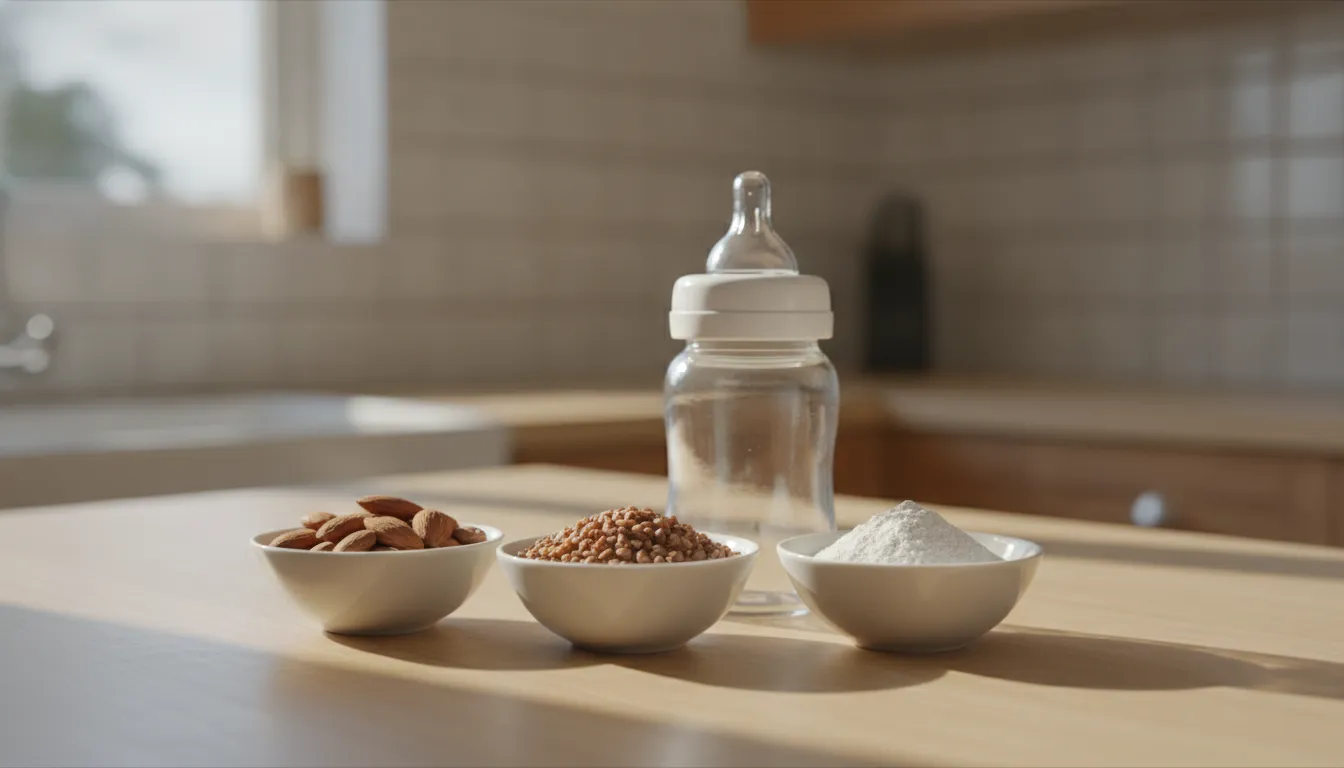
Reading a formula label can still feel overwhelming when every package uses different language. A helpful first step is looking beyond the front of the package and reviewing the ingredients in the order listed.
Ingredients that favor a gentle start
Look for a formula with clearly identified ingredients and a nutrition profile designed for infants. Parents may also value whole-food ingredients, especially when they want a plant-based option with a straightforward formulation.
Else uses almonds, buckwheat, and tapioca as primary whole-food ingredients. Depending on the product line, 80% to 90% or more of its content comes from minimally processed whole foods. This approach helps families see what contributes to the formula, and parents researching plant-based options can start with our science review of plant-based baby formula.
Certifications can offer another layer of transparency. Clean Label Project Purity certification is one trust signal parents may consider while reviewing sourcing, testing, and ingredient standards. You can explore Else's clean-label ingredients for more detail about this approach.
Ingredients to think twice about
Some families choose to avoid common irritants when reviewing formula options. These may include dairy, soy, corn syrup, gums, gluten, GMOs, and ultra-processed protein isolates. The goal is not to label every ingredient as harmful. It is to identify ingredients that may not fit your family's preferences or your baby's needs.
Many conventional formulas contain ingredients parents may want to compare more closely. A clean-label approach focuses on removing common irritants rather than masking symptoms with added ingredients. However, a different ingredient list does not guarantee that a formula will resolve digestive or allergy concerns.
When comparing labels, consider the complete formula rather than focusing on one ingredient in isolation. Check the protein source, carbohydrate sources, added nutrients, preparation directions, and any allergen statements. If your baby has a suspected allergy, feeding difficulty, or ongoing symptoms, speak with your pediatrician before changing formula.
Ingredient transparency can make an important decision feel more manageable. Choose a product that aligns with your family's preferences, meets your baby's nutritional needs, and gives you confidence in what goes into each bottle.
Powder, Liquid, or Ready-to-Feed: Which Formula Form Is Best for Newborns?
Formula form affects preparation time, storage, portability, and how much measuring happens during an already tiring day, and there is no single format that fits every newborn household. Commercial infant formulas come in liquid and powdered forms, according to the Centers for Disease Control and Prevention. The right choice depends on your routine, budget, feeding plan, and healthcare guidance.
| Form | Prep effort | Best for | Things to know |
|---|---|---|---|
| Powder | Measure powder and water, then mix carefully. | Families seeking a convenient, portable, and often economical option. | Powdered formula is not guaranteed to be sterile. Follow the label and safe preparation instructions closely. |
| Liquid concentrate | Measure concentrate and add the directed amount of water. | Parents who want liquid preparation without using fully prepared bottles. | Accurate dilution matters. Use the product label instructions, and refrigerate or discard it as directed. |
| Ready-to-feed | Open and pour. No mixing or measuring is needed. | Travel, overnight feeds, hospital discharge, or moments when preparation needs to be minimal. | It can cost more and may require more storage space. Check the label for storage and use instructions. |
For newborns, preparation safety matters more than convenience alone. Check that containers have no leaks, puffy ends, or rust spots before use. Never dilute formula more or less than the label directs. Incorrect mixing can change the nutrition and fluid your baby receives.
Also confirm that you are comparing infant formula, not toddler milk or a toddler drink. The CDC says toddler milks, drinks, and formulas are not needed to meet younger children's nutritional needs and typically contain added sugars. They are not interchangeable with infant formula.
If you are deciding between formats or considering a brand change, ask your baby's doctor or nurse for guidance. For a closer look at ingredients, preparation, and product differences, read our baby formula comparison guide.
Signs Your Newborn May Have a Sensitive Stomach (and What to Do)
Fussiness, spit-up, and changes in stool deserve attention, but they do not automatically point to one formula or a specific condition. Patterns matter more than a single episode. Note when symptoms occur, how much your baby takes, and how wet diapers and stools change. Share those observations with your pediatrician before switching formulas.
Some babies show these signs more often than others. Here are the signals parents commonly notice during or after feeds:
What feeding signals might parents notice?
- Fussiness during or soon after feeding.
- Arching the back, pulling away, or swallowing repeatedly while feeding.
- Frequent spit-up, since reflux is common in early infancy.
- Firmer stools, difficulty passing stool, or a change from your baby's usual pattern.
- Eczema flare-ups that raise questions about food sensitivities or cow's milk protein allergy, often called CMPA.
These symptoms can have several explanations. Fussiness, reflux, constipation, and eczema do not confirm CMPA or prove that a formula is responsible. A healthcare professional should evaluate persistent, severe, or concerning symptoms, and parents looking for more on reflux and formula can start with our reflux-safe formula guide.
When should you discuss a formula change?
Talk with your child's doctor before changing brands or formula types. The CDC advises discussing formula choices and switches with your child's doctor, especially when feeding concerns continue.
Your pediatrician can consider your baby's age, growth, feeding history, symptoms, and medical needs. They can also explain whether additional evaluation or a specific formula category is appropriate.
For parents exploring ingredient-conscious options, a plant-based formula may be one option to discuss with the care team. Else focuses on removing common irritants such as dairy and soy rather than masking symptoms. That approach may appeal to families researching a soy-free baby formula. However, an ingredient list alone cannot determine whether a product suits your newborn.
Do not use a formula switch to delay medical care. Seek prompt guidance for poor feeding, repeated vomiting, blood in stool, breathing changes, dehydration concerns, or poor weight gain. Your pediatrician can help you choose a safe next step without relying on guesswork.
Shop Else plant-based baby formula and compare its whole-food ingredients for yourself.
Frequently Asked Questions
What is the best baby formula for newborns?
There is no single formula that is best for every newborn. Choose a commercial infant formula made for your baby's age, review its ingredients, and discuss individual needs with your pediatrician. In the United States, the FDA regulates commercial infant formulas to meet minimum nutritional and safety requirements. Learn more from the CDC.
Which formula is best for babies from 0 to 6 months?
Look for an infant formula specifically labeled for babies, with a complete nutritional profile and iron fortification. Avoid substituting toddler milk or formula for infant formula. If your baby has feeding difficulties, suspected allergies, reflux, or another medical concern, ask your pediatrician before choosing or changing products.
How do I choose formula for a breastfed baby?
Start by considering why you are introducing formula, your baby's tolerance, and the ingredient profile you prefer. A gradual transition may be appropriate for some families, but your pediatrician can help you choose a formula and feeding plan that fits your baby's needs. Read preparation and storage directions carefully, especially when using powdered formula.
What should I look for in formula for a newborn?
Prioritize an infant-specific formula with clear ingredient labeling, iron fortification, and a container that is sealed and undamaged. Check for leaks, puffy ends, or rust spots before use. Parents seeking plant-based nutrition may also compare protein sources, common irritants, whole-food ingredients, and relevant purity certifications.
Is there a recommended formula for newborns when I am concerned about heavy metals?
Ask your pediatrician which formula is appropriate for your baby and review the manufacturer's ingredient, quality, and testing information. Avoid homemade formula and products from unauthorized third-party sellers. The CDC notes that legally sold U.S. infant formulas, including eligible imports, must be reviewed by the FDA, while some illegally imported products may not be.
Ready to Choose a More Transparent Start?
When you are comparing newborn formulas, a clear ingredient list can make the decision feel more manageable. Review Else plant-based baby formula and see whether its approach fits your family's feeding plan. If your baby has feeding difficulties, allergies, or other medical concerns, check with your pediatrician before making a change. Shop Else plant-based baby formula to get started.